
This post is for information and support only. It’s not medical advice and doesn’t replace care from a lactation consultant, pediatrician, or other qualified provider.
You worked hard for every ounce, so it deserves a safe place to wait. The good news is that breast milk storage guidelines are simpler than they look. Once you know a handful of times and a few habits, storing milk becomes something you do on autopilot, even at 3 a.m.
This post follows Postpartum Self-Care & Emotional Support in our ongoing series.
How Long Does Breast Milk Last?
Here are the storage times from the Centers for Disease Control and Prevention (CDC) for freshly expressed or pumped milk:
- On the counter: up to 4 hours, at room temperature of 77°F or cooler.
- In the refrigerator: up to 4 days.
- In the freezer: about 6 months is best, and up to 12 months is acceptable.
- In an insulated cooler with frozen ice packs: up to 24 hours.
Once milk has been thawed or warmed, the clock moves faster:
- Thawed in the refrigerator: use within 24 hours of being fully thawed.
- Brought to room temperature or warmed: use within 2 hours.
- Never refreeze milk after it has thawed.
- Leftovers from a feeding: use within 2 hours after the baby finishes, then discard what is left.
If you will not use fresh milk within 4 days, freeze it right away rather than waiting.
Pick the Right Containers
Use breast milk storage bags, or clean, food grade glass or plastic containers with tight fitting lids. Skip disposable bottle liners and any plastic bags not made for breast milk, since they can split or leak. A few packing habits make freezing easier:
- Freeze in small amounts, such as 2 to 4 ounces, so you only thaw what one feeding needs.
- Leave about an inch of space at the top, because milk expands as it freezes.
- Lay bags flat to freeze. They stack neatly and thaw faster.
Label and Date Everything
Write the date you pumped on every bag or bottle before it goes anywhere. If your baby is going to daycare, add your baby’s name too, and ask the provider about any other requirements they have. Labels let you follow a simple rule: use the oldest milk first. A permanent marker and a strip of tape on the freezer door is all the system you need.
Where to Put It in the Fridge and Freezer
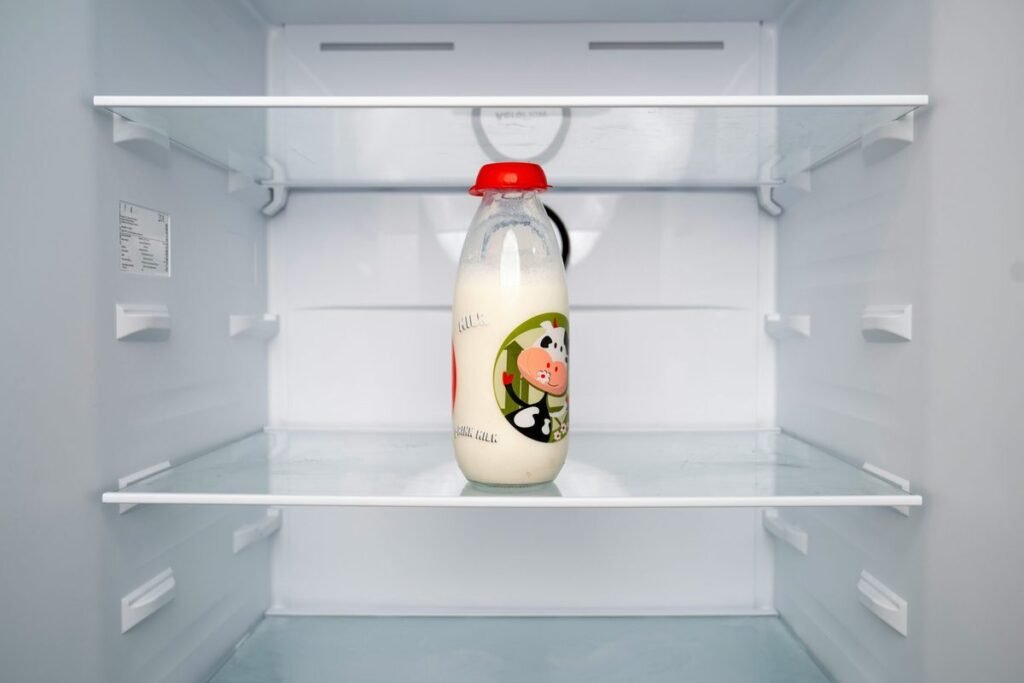
Store milk toward the back, not in the door. The door warms up every time it opens, and milk does best when its temperature stays steady. A small bin or box labeled “milk” keeps everything together and easy to grab.
Thaw and Warm Milk Gently
- Thaw the oldest milk first.
- Thaw it in the refrigerator overnight, in a bowl of warm water, or under lukewarm running water.
- Never thaw or heat milk in a microwave or directly on the stove.
- Breast milk does not need to be warm. Room temperature or cold is fine.
- If you do warm it, keep the container sealed and set it in warm water for a few minutes, then test a drop on your wrist.
- Swirl the milk gently to mix the fat that rises to the top. It is normal for milk to separate.
Florida Tip: Plan for Heat and Hurricane Season
Florida summers make the 77°F counter limit matter, and a warm car can heat up fast. If you are out for the day, pack milk in an insulated cooler with frozen ice packs, which the CDC says keeps freshly expressed milk good for up to 24 hours. Once you arrive, use the milk right away, refrigerate it, or freeze it.
It also helps to keep a cooler and ice packs ready during hurricane season. If you want more guidance for storms or power outages, ask your lactation consultant or check the CDC’s breastfeeding FAQ page. Best Questions to Ask a Lactation Consultant can help you prepare for that conversation.
Storing Milk When You Pump at Work
If you pump on a schedule, a small routine saves time. Keep a cooler bag with ice packs at your desk, label as you go, and move milk to the fridge or freezer as soon as you get home. Our posts Pumping Basics for Moms Who Want Flexibility and Breastfeeding and Going Back to Work: How to Prepare walk through the rest of the day. If you are still building your pumping kit, our Nursing Mom Essentials Kit list covers the extras that make life easier, including a cooler bag.
A Simple Storage Routine
- Wash your hands and use clean containers.
- Pump, then label with the date right away.
- Refrigerate or freeze based on when you will use it.
- Use the oldest milk first.
- Throw out thawed milk that has passed its time instead of guessing.
When in doubt, follow the times above, and talk to your pediatrician or lactation consultant about your baby’s situation, especially for premature babies or babies with health concerns.
Pumping and storing is a lot of work, so keep your own energy up too. Keep a soft, delicious snack within reach, and browse Honey’s cookies in our shop whenever you are ready.
Set up your storage routine today with one pack of labels and one marker, and your future self will thank you.
Up next in our series: Lactation Cookies vs. Regular Cookies: What Makes Them Different?